
When My Thinking Can't Be Trusted, I Don't Have To Trust My Thinking
The Controlled Spiral

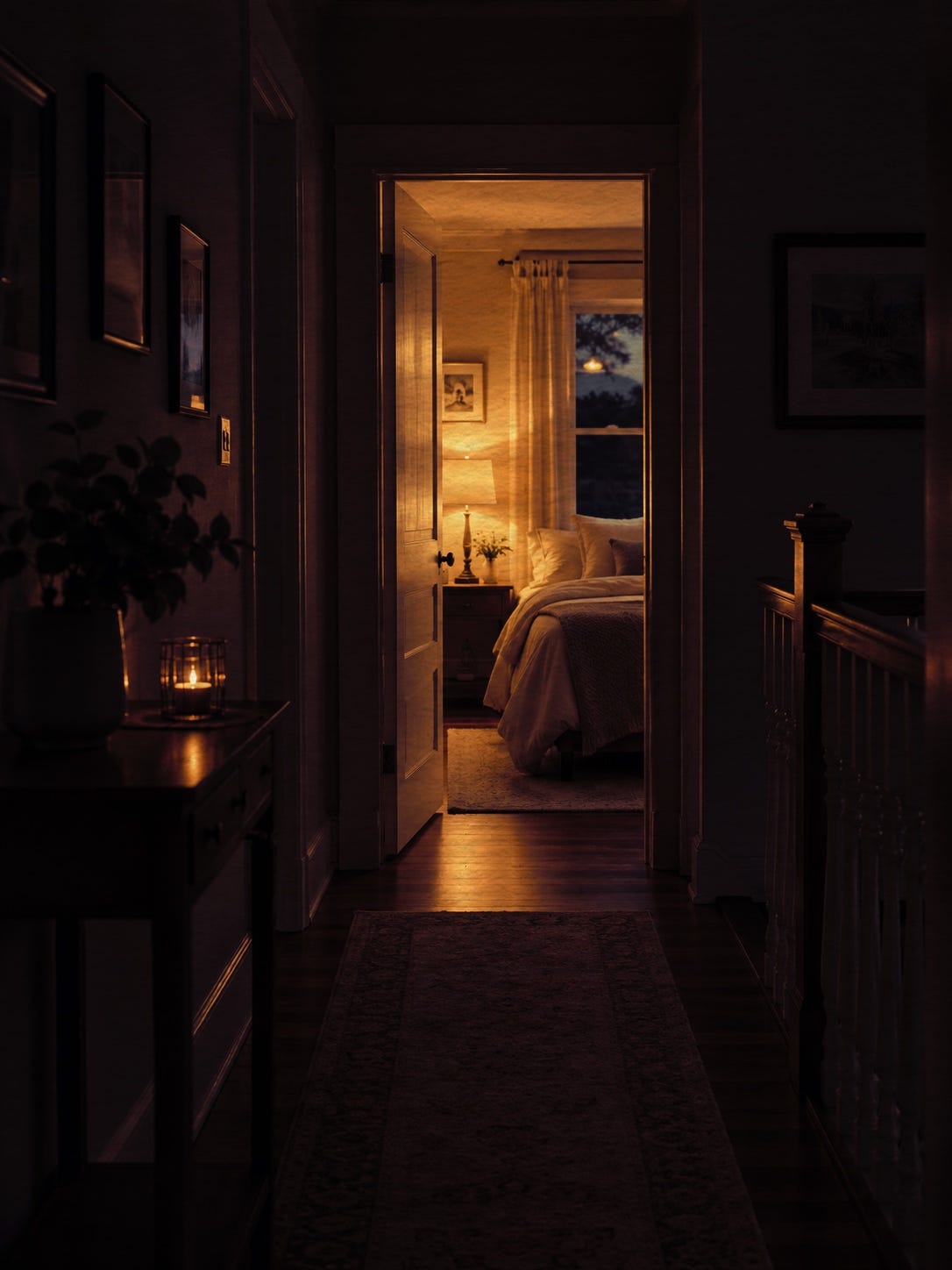
Hey, you.
Yeah, you.
Do you feel like
you’re losing your mind right now?
You may very well be.
But look around.
You might be falling…
...but you’re in a controlled spiral.
And for the “controlled” part, you can thank all the work you’ve done in recovery thus far.
If that doesn’t describe you.
If your spirals feel completely…
o u t of co n t r o l...
I see you too.
I’ve been you.
This essay is just as much for you. Because a controlled spiral isn’t where recovery begins. It’s where recovery can take you.
And if you’re reading this on one of the good days...
Keep reading anyway.
Someday you could need this as well.
Recovery is a series of exchanges.
“How the hell am I ever going to get through this?”
followed months later by...
“Huh. I can’t believe I actually made it through that.”
Call it God.
Call it grace.
Call it stubbornness.
Call it the people who refused to quit on you.
Call it your own tenacity.
Whatever you call it, if you’re reading this, you’ve survived every day that has brought you here. I’m not saying you conquered every day. Some battles took things from you. Some left scars. Some changed you forever. But you’re still here.
And at some point, if you pay attention, you’ll look down at your own feet almost in disbelief and think,
“I can’t believe I’m still here.”
Life isn’t done serving hardship, though.
Another storm is coming.
Another loss.
Another disappointment.
Another season where you wonder if this one might finally be too much.
The difference is that recovery has been quietly handing you tools the entire time.
Every boundary.
Every meeting.
Every difficult conversation.
Every prayer.
Every time you chose to pause instead of react.
Every time you reached out.
Every time you survived without escaping.
Those become part of the person who walks into the next storm.
I think one of the reasons I write these essays is because I know I’m going to need them.
Life has a way of making me forget what I already know.
So I write.
I write to remind myself of truths I don’t want to have to rediscover every time life falls apart.
Maybe you need them too.
But first…
(not to be rude)
I need them.
Because another storm is coming. I don’t know when. I don’t know what it’ll look like. I just know enough about life to stop pretending otherwise.
This essay is me stocking the storm cellar while the sun is still shining.
Sometimes you come out of a battle feeling strong. You look down and think, These tools work, as you pump your fist then kiss your bicep (since it’s right there anyway).
Other times you crawl out missing large pieces. Exhausted. Barely recognizable. Certain you’ve lost.
But then you notice something:
You didn’t drink.
You didn’t burn your life down.
You didn’t become the person you used to become.
Those were the tools.
Sometimes the greatest evidence that your tools worked isn’t that you felt powerful.
It’s that your life is still standing.
That’s what a controlled spiral is to me. I know I’m about to get pulled into a vortex. I know I can’t stop it. But I also know the boundaries I’ve built around myself. I know my strengths. I know my weaknesses. I know that when my thinking can’t be trusted, I don’t have to trust my thinking.
I can trust my systems.
I can trust the habits recovery has built.
I can trust the wiser parts of me that have learned to take care of the hurting parts.
A few months back, there came a point during those five overlapping conversations—just as the depression was settling in—when I honestly thought I was going to lose.
my.
mind.
I mean I genuinely wondered if this was the moment I finally came apart.
Imagine jumping out of an airplane and realizing your parachute isn’t going to open. There has to be a moment after the panic where your body simply accepts what it believes is coming. I remember something like that.
I remember standing in the kitchen, leaning against the island. I threw my hands toward the ceiling and just left them there… head shaking back and forth. I wasn’t praying. I wasn’t talking to God. I wasn’t talking to myself. I wasn’t talking to anybody. I had simply surrendered.
I didn’t give up. I gave in.
And here’s what I didn’t realize until later—I let cooler heads prevail. I gave in to good sense.
Around 5:30 that afternoon I shut the house down. I took Robin outside one last time.
Turned on the porch lights.
Closed the blinds.
Turned off the electronics.
Then I shuffled down the hallway toward my bedroom.
About halfway there I remember feeling like I was falling. Not physically. Internally. Like whatever had been holding me together had finally given way.
And yet...
I was strangely calm.
Not because I stopped falling. Because I wasn’t falling alone. The man I used to be would’ve taken that moment as permission to completely lose his sh*t. He would have picked a fight. Drank. Burned a bridge. Sent the text. Quit the job. Blown something up just so the outside world would finally match his internal chaos.
Instead, this version of me quietly walked me down the hallway and put me to bed at 5:30 in the afternoon. He knew nothing good was going to come from arguing with my thoughts in that condition. Arm around my shoulders—he knew tomorrow would be different. He knew survival was enough for one day.
“Let’s go, kid,” he gently whispered. “You gave all you had today. I’ll take it from here.”
That’s what recovery had given me. Not the absence of spirals.
The ability to survive one without making it worse.
So I let myself go to bed at 5:30 in the afternoon. Not because I’d given up. Because I hadn’t. That wasn’t surrender to depression. It was surrender to wisdom.
The spiral wasn’t controlled.
My response was.
Children. Bless their hearts. They trust every thought they have.
*stares at green bean*
“This looks like it will fit perfectly up my nose. Let’s see… “
Mature people, on the other hand, learn that not every thought deserves to be believed. Recovery is, in many ways, learning the difference.
There was a time when every thought that entered my head became an instruction.
You’re overwhelmed. Drink.
You’re ashamed. Hide.
You’re angry. Send the text. SEND IT!
Now I know my thoughts aren’t always telling me the truth. Sometimes they’re just reporting the weather. Sometimes they’re accurate. Sometimes they’re wildly distorted. Either way, they don’t automatically get to make my decisions.
Besides, we don’t stop the storm. We stop electing the storm as our decision-maker.
Which means…
Whenever my thinking can’t be trusted, it’s time for a board meeting.
I can trust the person I became before my thoughts went sideways. I can trust the healthiest parts of me to care for the wounded parts.
Early in recovery I thought the goal was simply to collect better tools.
Prayer.
Meetings.
Friends.
Boundaries.
Exercise.
Journaling.
Systems.
But having tools isn’t the same thing as being able to use them.
It’s one thing to be dying of thirst in the desert with no water. It’s another to be dying of thirst while your full canteen hangs from your neck. You know the water is there. Hell, you’ve been carrying the weight of it along with every other friggin thing right now.
You know it would help.
But for whatever reason, you can’t seem to unscrew the cap.
Depression can feel like that. But so can plain old recovery. You know what? So can life in general. Sometimes the tools haven’t disappeared. Our ability to reach them has.
And that’s when I realized something. There are parts of me I owe an enormous debt of gratitude to. They had the foresight to prepare for storms they hoped would never come. They walked into the storm cellar on good days and stocked the shelves. They loosened the lids on the containers because they knew there would come a day when my hands might shake too much to open them. They filled the gas tanks before the power went out. They sharpened the blades before anything needed cutting. They reinforced the shields before the battle even arrived. They left food for a version of me they had never met, but believed would need it someday.
When my thinking can’t be trusted, I don’t have to trust my thinking.
Depression.
Stress.
Life.
Those things don’t always take away your tools. Sometimes they only take away your ability to use them. That’s why I don’t just rely on my thinking. I can trust the man who built the systems and the guardrails. I can trust the parts of me who stocked the storm cellar. They loosened the caps for me on my good days so I’d still have a chance on my worst ones.
The spiral wasn’t controlled.
My response was.
The depression still came.
The fear still came.
The exhaustion still came.
But my response stayed inside the guardrails that years of recovery had built. I didn’t have to feel strong. I only had to trust the strongest parts of me.
Although most of 2026 has been touched by depression, I’ve kept my life afloat. I wrote. I answered the bell when my family needed me. I ran a recovery group. I maintained conversations and opened mail.
I exercised. Some.
I slept. Tons.
But I didn’t collapse.
The systems held up.
As I look back through my journal and my recent essays, I see that depression arrived sometime in late February/early March. But it didn’t announce itself—or “hit,” as many like to say—until nearly May. Then two months of that, with these past two weeks feeling like I’m finally gathering steam again.
Meanwhile, I write.
I document the maps and the processes.
I record my feelings so these words I type now will comfort some future version of me who’s hurting. I say to that wounded Future Shane, “I love you, bud. We’ve been here before, and here’s what it felt like back then, too. Keep trusting the systems. Someday, you will encourage other versions of us who need it.”
So what does that actually look like?
How do you build a system?
Better yet... what even is one?
A system is simply a collection of healthy responses you’ve practiced often enough that they begin showing up when you need them most. It’s what happens when your tools stop being things you know about and start becoming things you naturally reach for.
It’s your sober friends. The ones who’ll hold you accountable and expect you to do the same.
It’s your breathing routine when you panic.
It’s your prayer when it’s time to give some things away.
It’s your journal.
Your therapist.
Your go-to TV show.
Your book.
Your furry friend curled up on your leg.
Your meeting.
Your favorite trail.
Your favorite tea.
It’s all the things that can bring you relief without letting you stray too far from home.
But it’s also something else. It’s you using them. Over and over again. A day at a time and then another.
Until one day you look back and realize...
you have real-life evidence that they work.
Then when life inevitably does what life does, and you’ve had enough to throw your hands up, you don’t have to panic or give up. You just have to give in to the blanket that’s being slipped around your shoulders by the systems you built, my friend.
Sometimes recovery doesn’t look like conquering the storm.
Sometimes it looks like letting the healthiest part of you quietly take you by the hand...
...and walk you to bed.
That’s a controlled spiral.
This one really landed, Shane. Thanks for sharing so openly.
I’m in my 6th year of recovery and still, the ongoing lesson is that my thoughts can be informative without being authoritative. They don’t all deserve a vote.
Depression played a big part in my own journey. It used to appear every couple of months. I'd take to my bed.
The worst episode was five years after I quit alcohol. Back then I worked full-time as a freelance writer. I lost my main client, and I spiraled. I needed to find replacement work, but instead I took to my bed. I felt crippled by shame and fear that I'd let my family down. It stayed like this a few days. The thought of drinking didn't enter my head, but the idea of jumping off a cliff did.
One of the problems with depression and anxiety is that everything would seem impossible when I was in that state. My mind was coming up with solutions, but they would instantly be rejected. I finally remembered to use a breathing technique to quieten down the mind. It worked. As things began to settle, the negative thoughts began to lose their grip on me, and I could see more clearly.
It's been thirteen years since that happened, and I've never suffered from depression again. I still get low periods. Sometimes I might even go to bed a bit earlier, but I'm no longer afraid. I have a system.